At first glance, writing code and choreographing a dance seem to have nothing in common. One involves sitting at a desk, staring at a screen full of text. The other involves standing in a studio, moving through space. But look closer and the parallels are striking. Both are fundamentally creative acts that involve building complex structures from simple elements. Both require an understanding of sequence, timing, and logic. And increasingly, both are happening in the same room.
The Rise of Computational Choreography
Choreographers have been experimenting with technology for decades. Merce Cunningham famously used the software LifeForms in the 1990s to generate movement sequences that would have been impossible to conceive through traditional methods. But what was once the province of a few visionary experimenters has become a genuine movement within the dance world.
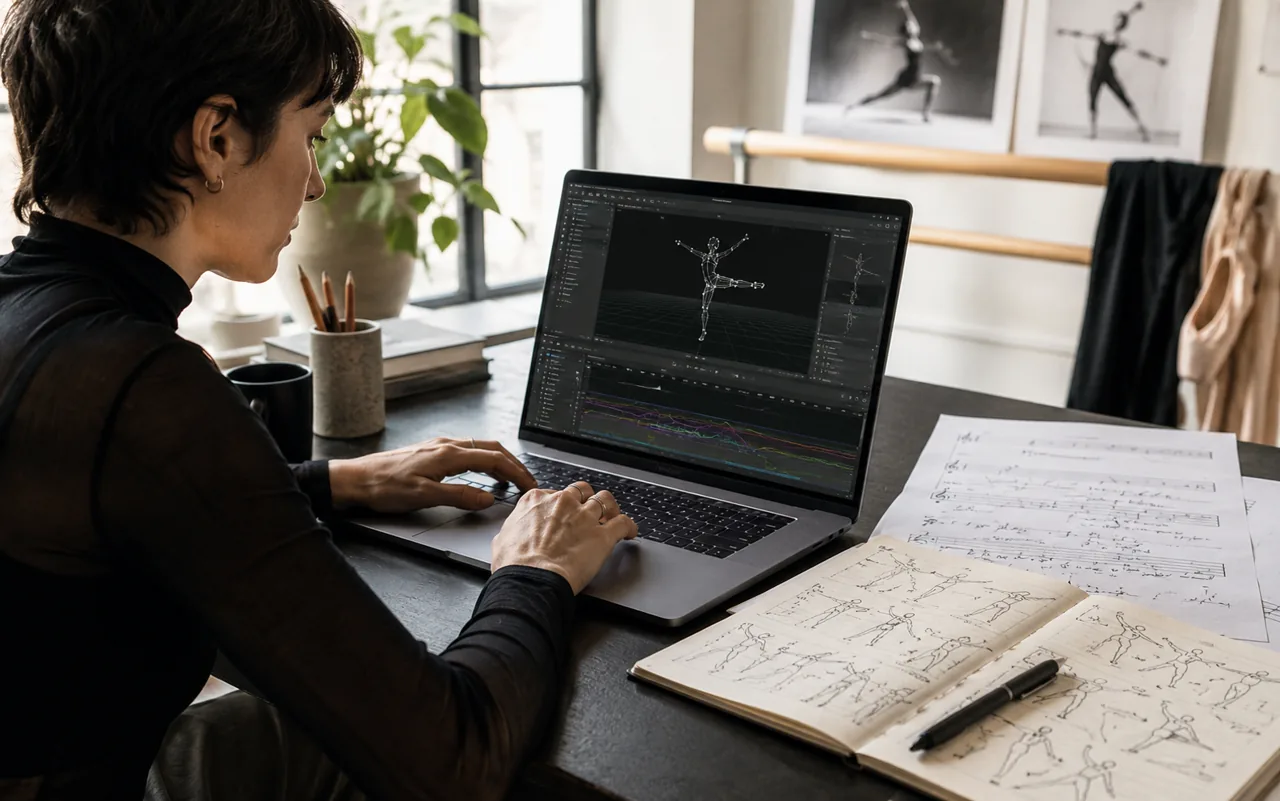
Today, choreographers use code to generate movement material, to control interactive stage environments, and to analyse patterns in their own work. Motion capture technology allows a dancer's movements to be recorded as data, which can then be manipulated, remixed, and fed back into the creative process. Some artists are even working with machine learning systems that can generate original choreographic material based on training data from existing works.
The results are often startling. A human body performing movements generated by an algorithm has a quality that is neither entirely human nor entirely mechanical. It sits in an uncanny space that challenges audiences to reconsider what they think they know about dance and about technology.
Coders Who Dance, Dancers Who Code
One of the most interesting developments in this space is the growing number of practitioners who work fluently in both disciplines. These are people who can write a Python script in the morning and rehearse a contemporary piece in the afternoon, and who see no contradiction between the two activities.
For these hybrid artists, the connection between coding and choreography is intuitive. Both involve building sequences of instructions. Both require debugging, the process of finding and fixing errors in a complex system. Both reward elegance, the quality of achieving a desired outcome with the minimum of unnecessary complexity.
This crossover is producing a new aesthetic sensibility and a new kind of cultural identity. It is no longer unusual to see programmers at dance performances or dancers at tech meetups. The communities are merging, and the shared culture is reflected in everything from collaborative projects to what people wear. Developers who dance often wear their dual identity proudly, and the coding collection at Geek T-Shirts has found an unexpectedly enthusiastic audience among movement artists who see programming as just another form of creative expression.
Interactive Performance Spaces
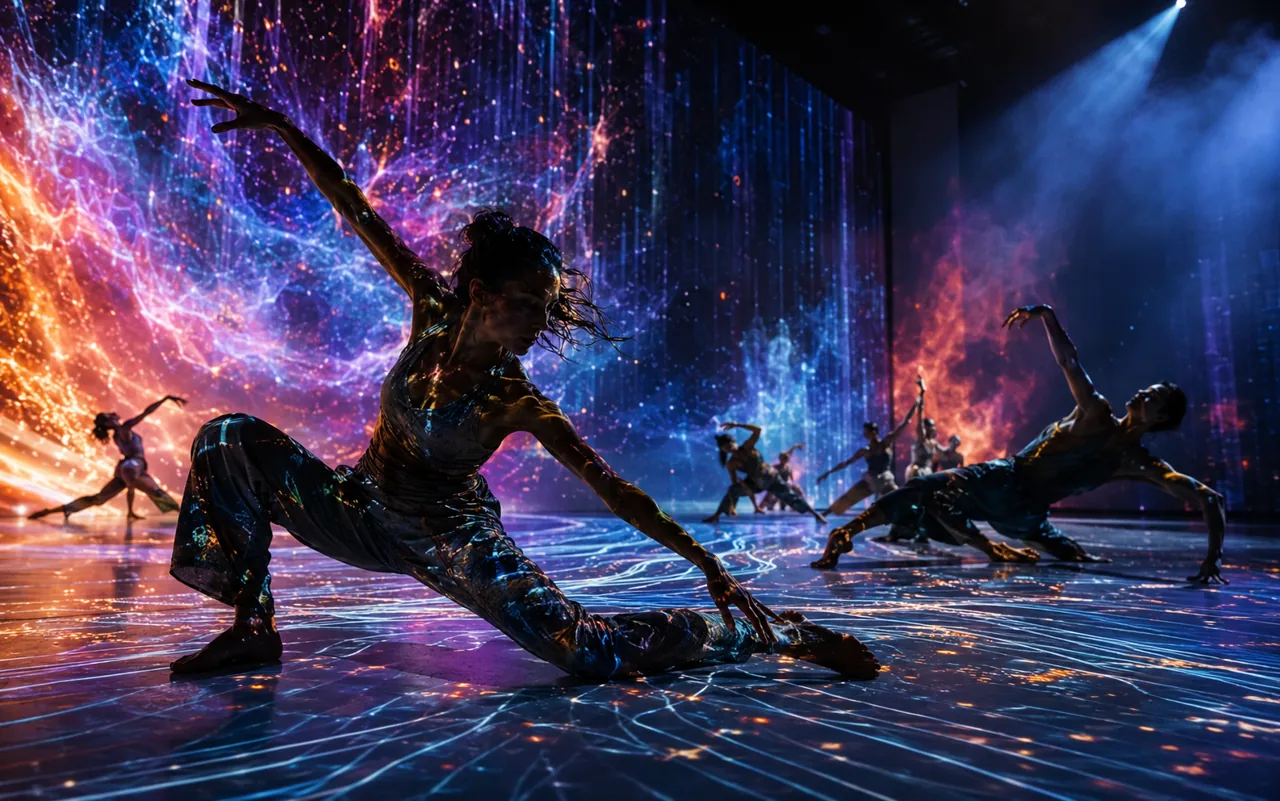
Perhaps the most visible intersection of coding and choreography is in interactive performance. Artists are creating works where the stage environment responds in real time to the dancer's movements. Sensors track position, velocity, and proximity, and custom software translates this data into changes in lighting, sound, projection, and even the behaviour of robotic stage elements.
These performances require a new kind of rehearsal process. The dancer is not just learning choreography but learning to interact with a responsive system, understanding its logic and finding ways to play with it, subvert it, and push it to its limits. The technology becomes a dance partner, and the relationship between human and machine becomes the subject of the work itself.
What Gets Lost, What Gets Found
Not everyone in the dance world is enthusiastic about this technological turn. There are legitimate concerns about the loss of human spontaneity when movement is generated or constrained by algorithms. There are questions about accessibility, since the tools and equipment required for tech-heavy performances are expensive and require specialised knowledge.
But the best work in this space does not use technology as a replacement for human creativity. It uses technology as an amplifier, a tool that allows choreographers to explore territories that would otherwise be unreachable. The body remains at the centre. The code simply opens doors that the body could not open alone. And when dancer and algorithm find their rhythm together, the result is something that neither could have produced independently.